
In this post MEASUREMENTS AND CONVERSION OF THE MX-P50M POWER AMPLIFIER I took a detailed look at the technical data of two of these MX-P50M HF amplifiers.
Now, after three POTA activations, I can conclude that this power amplifier (PA) is a significant enhancement to my POTA shack, which comprises an ICOM IC-705 and a tuned antenna (SOTABEAMS BandHopper) using this Tactical Mini - Compact ultra-portable 6 m (19.6 ft) mast to erect the antenna.
The power-output can be checked here MEASUREMENTS AND CONVERSION OF THE MX-P50M POWER AMPLIFIER. I was running the IC-705 with 5W on the 40m, 30m and 20m Band.
Even in hot operating spaces of up to 30°C, if you do not cover the cooling fins of the PA, they will only get moderately warm. You can therefore always touch the PA without getting hot fingers.
I didn't receive any complaints about my transmitted signal – everyone is happy with this strong signal from a POTA park!
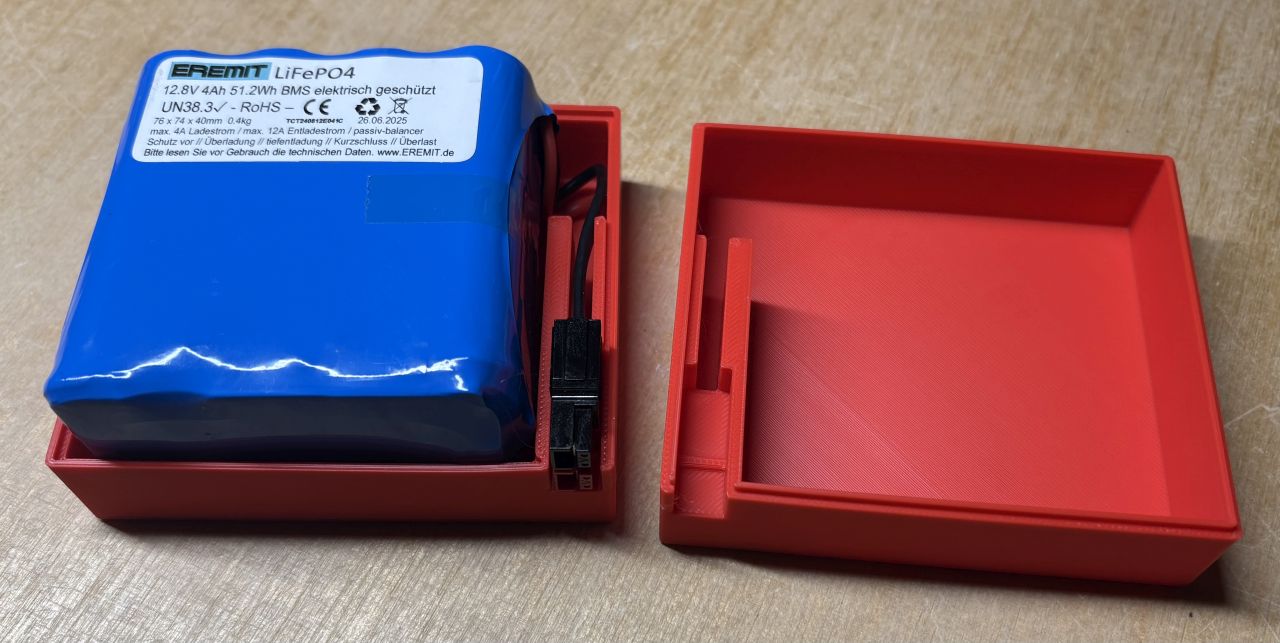
All LiFePo batteries I own have a connection cable that comes out of the battery casing and ends in a pair of Powerpole connectors.
After prolonged use, the connection cable becomes increasingly “flexible,” meaning that more and more wires in the high-current strand break. As long as the break is close to the connector plug, this is not a problem and can be easily repaired. However, if the break is where the cable exits the battery casing, it becomes difficult to repair the damage.
The HM-243 speaker/microphone combo supplied with the ICOM IC-705 is rather bulky, making it difficult to transport and operate. It has a thick, curled cable and must be connected to the side of the IC-705 with two jack plugs.
Inspired by a newsletter from WIMO.COM I tried the Bluetooth speaker/microphone combo BHM-79 from VERO TELECOM. At just 120g, the BHM-79 is an extremely lightweight speaker/microphone.
.jpg)
.jpg)
Read more: Using the BHM-79 wireless Bluetooth microphone with an ICOM IC-705
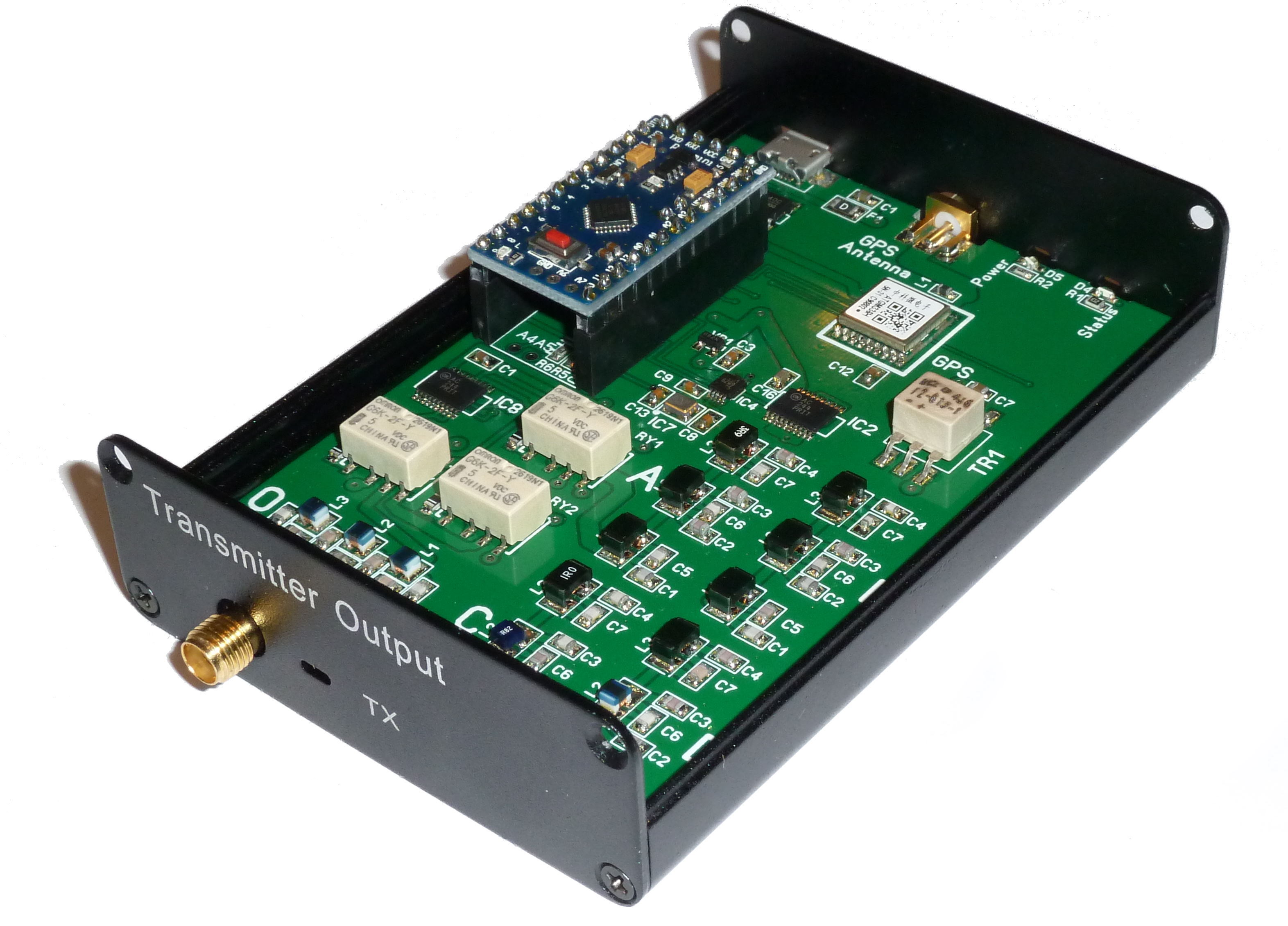
I ordered some days ago a new ZachTek WSPR desktop transmitter for some field tests. This transmitter is powered by 5VDC via a simple USB cable.
As an avid reader of Tom's K4SWL Blog I've seen HAMs using many times a small powerbank from Talentcell - the YB1203000-USB - which is advertised as a 12V 3.000mAh powerbank.
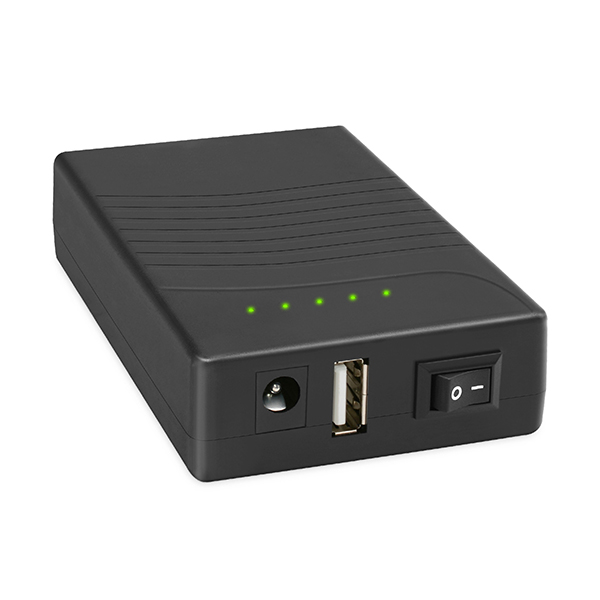
As can be seen on their website, that the powerbank uses three 18650 LiIon cells. The regular voltage of an LiIon battery is 3.6V - three cells will give 10.8V and not 12V?!
Initally with not further searching on the internet, I ordered the powerbank on eBay, as the specs looked fine on first glance :-/
Andreas has already implemented a computer interface for the ICOM CI-V protocol for his antenna tuner.
I have built a Bluetooth interface into my tuner so that you can control the tuner very conveniently via the ICOM IC-705.
I wanted to make something again :-)
The result is a symmetrical antenna tuner for KW up to max. 20W. Further details can be found at the inventors web-site, Andreas, DL4JAL:
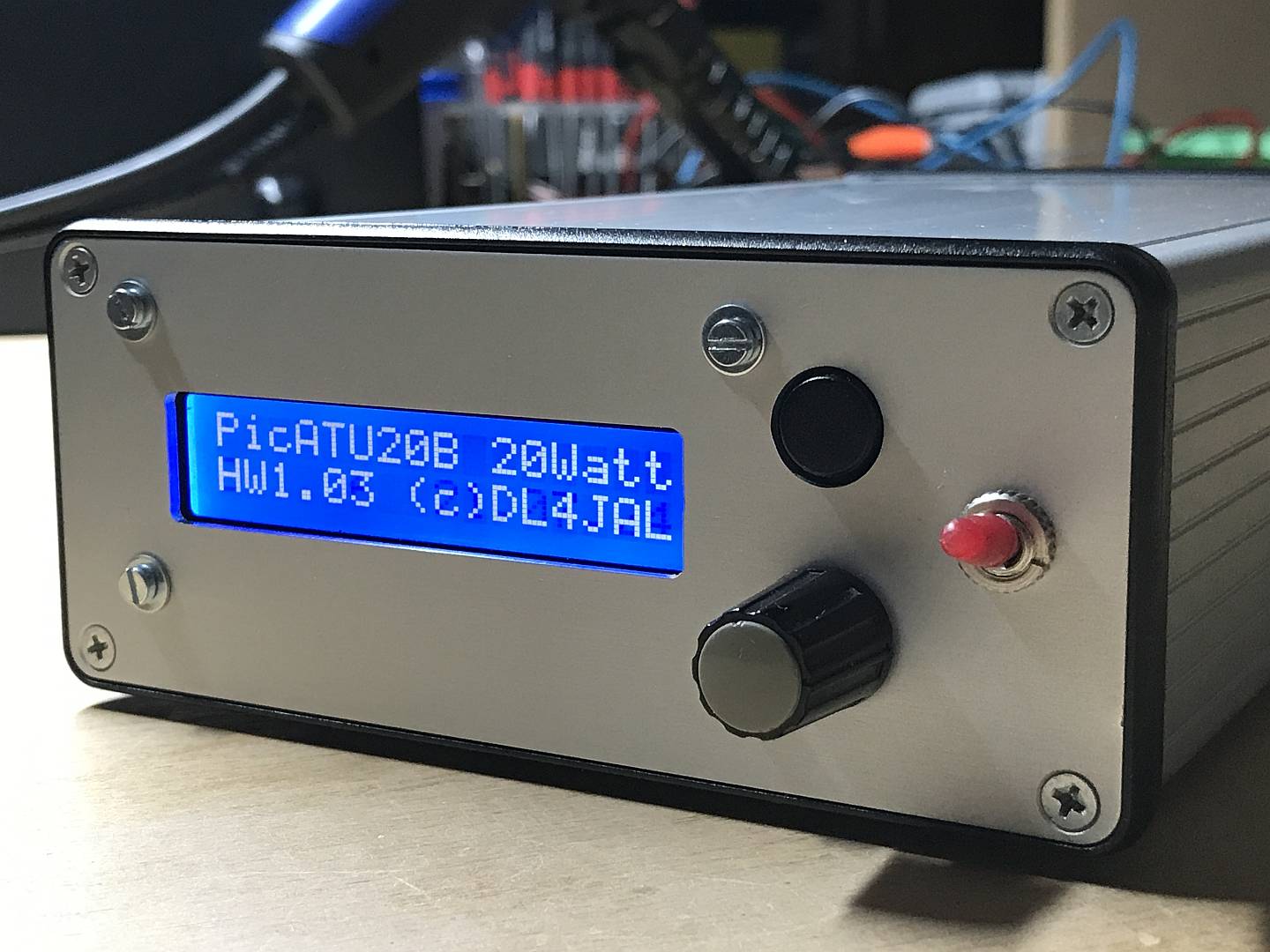
Andreas' preparations are great - the whole circuit worked straight away. At the beginning I thought - uuuuh soldering this much chicken feed - with good solder, lots of light and a head magnifier I managed it quite well.
Now the tuner is ready for its first field use on a symmetrical dipole - I'll report back.
Intro
I try to fix a HARDROCK-50 amplifier, which a fellow HAM bought second hand but it didn't really work.
One of my HAM fellows has build a new 2kW HF amplifier. Together with his SDR ANAN-100 he gets really impressive IM3 values.
This inspires me also to do some measurements on my existing HF transceivers - K3 & KX3. For this I needed a two-tone generator.
I've made a simple cheat sheet for my HamGadgets Ultra Picokeyer because it is hard to remember the various key sequences and abbreviations in the menu mode :-)
Die Zeitschrift Funkamateuer bietet einen Bausatz für ein Leistungsdämpfungsglied an.
Last week I received my long awaited K-POD from QRP-Project in Berlin.

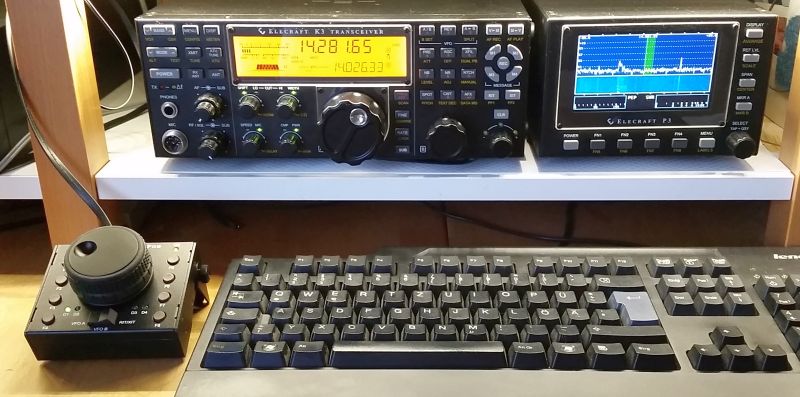
My proof-of-concept works pretty stable - please check the status screen:
Here I've build an audio CW-filter based on the circuit from NM0S/4SQRP.
This filter works pretty well. I've done some audio analysis using a cheap soundcard from BEHRINGER and the shareware application AUDIOTESTER.
Now I've finished the Audio CW-filter I've decribed here in details.
Last year I've build the cheap Frog Sounds QRP Transceiver. This transceiver has a pretty basic audio section - a simple LM386 audio amplifier with some LC/RC filtering.
Basics
Inspired from the work of EA4TX and K3NG I decided to check, whether the ESP8266 based NodeMCU 1.0 (ESP-12E) is usable as a simple remote IP-based rotator control. You can get the NodeMCU in a decent quality on eBay.
Idea was, to link a local emulated serial port to the NodeMCU module. The HAM Radio applications are communicating via the standard Yaesu GS232A protocol with the emulated serial port. This emulated serial port then forwards the serial requests to the NodeMCU.
Read more: Rotator control and the NodeMCU - a proof of concept
You may have seen my build version of the M0UKD sensor keyer and the Bamatech sensor head. 
As you can see in this post, I've used a simple slide switch to control the power for the sensor keyer. This was a little bit annoying, as you must always check, whether you've turned of the power, when you leave the shack.
As power consumption is not really a big issue - the keyer draws about 2.5mA from two AA-cells. Based on the capacity of an average Energizer Classic AA battery of 1.200mA you will get an on-time of about 300h.
Since many months I've had the idea, to add an electronic switch to the keyer, so it switch of automatically after 15 minutes of idle time.
Based on the work of John, M0UKD, I've build a small sensor-keyer. I used a surplus aluminium shelf and two aluminium stand-offs as "paddles".
See the evolution of this project here.
Für den ersten nanoKeyer habe ich mir zwar das Original-Gehäuse gekauft, aber der Einfachheit halber eine simple Alu-Fronplatte genommen. So richtig schick war die auf Dauer nicht. Es wurde langsam Zeit, dass er noch eine schöne Frontplatte bekommt.